

Blockhouses
Dieppe-Pourville Golf Club is home to several remains of the Atlantic Wall, direct witnesses to World War II.
Located on the heights of the Alabaster Coast, this peaceful site still bears visible traces of a strategic military past, often overlooked by visitors.
Between bunkers, blockhouses and former radar installations, the golf course offers a true open-air historical trail, where heritage and landscape coexist.
The bunkers of Dieppe-Pourville Golf Club: remnants of the Atlantic Wall
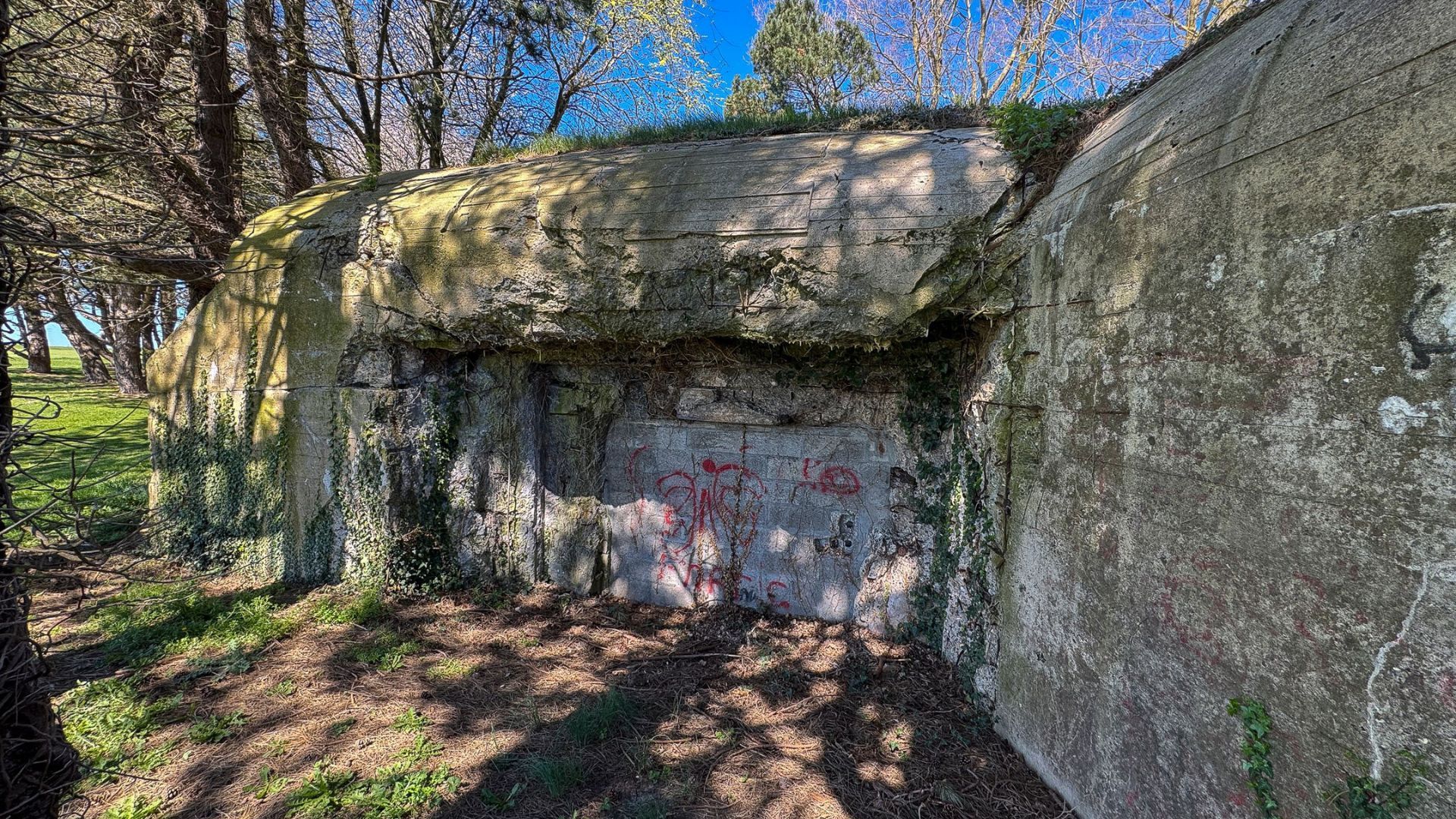
The Atlantic Wall was a vast defensive system built by Nazi Germany between 1942 and 1944 to prevent an Allied landing.
It stretched for more than 5,000 kilometres, from Norway to the Franco-Spanish border, along the North Sea and the Atlantic coast.
Along the Alabaster Coast, many fortifications still remain:
- on the cliffs,
- along roadsides,
- sometimes collapsed onto beaches or integrated into the urban landscape.
Dieppe-Pourville Golf Club preserves several of these remarkable structures, now fully integrated into the natural relief of the course.
A strategic radar base at the heart of the golf course
As early as 1941, the Organisation Todt mobilised more than 1,500 workers in this area to develop a strategic radar station.
The objective was to secure German air superiority and counter RAF operations as part of Operation Seelöwe. Two Freya-type radars were installed on the clifftops to monitor airspace over the English Channel.
On 19 August 1942, during the Dieppe Raid, the site was directly targeted due to its strategic importance.
Following this event, the installations were reinforced with the deployment of a Mammut FuMO 51 radar, featuring:
- a 10 × 30 metre antenna,
- a detection range of approximately 300 kilometres
- installed on a type L485 bunker.
The site also included:
- an Anton command post (type L479),
- Würzburg-Riese radars,
- a network of defensive bunkers.
These installations made it possible to track Allied squadrons on illuminated Seeburg plotting tables, alert fighter aircraft and anti-aircraft defences, and organise interceptions over the Channel.
Up to 600 people (soldiers and operators) occupied the site during the war. While the radar systems have disappeared, the bunkers remain clearly visible today.
Photo gallery of the Dieppe-Pourville Golf Club blockhouses
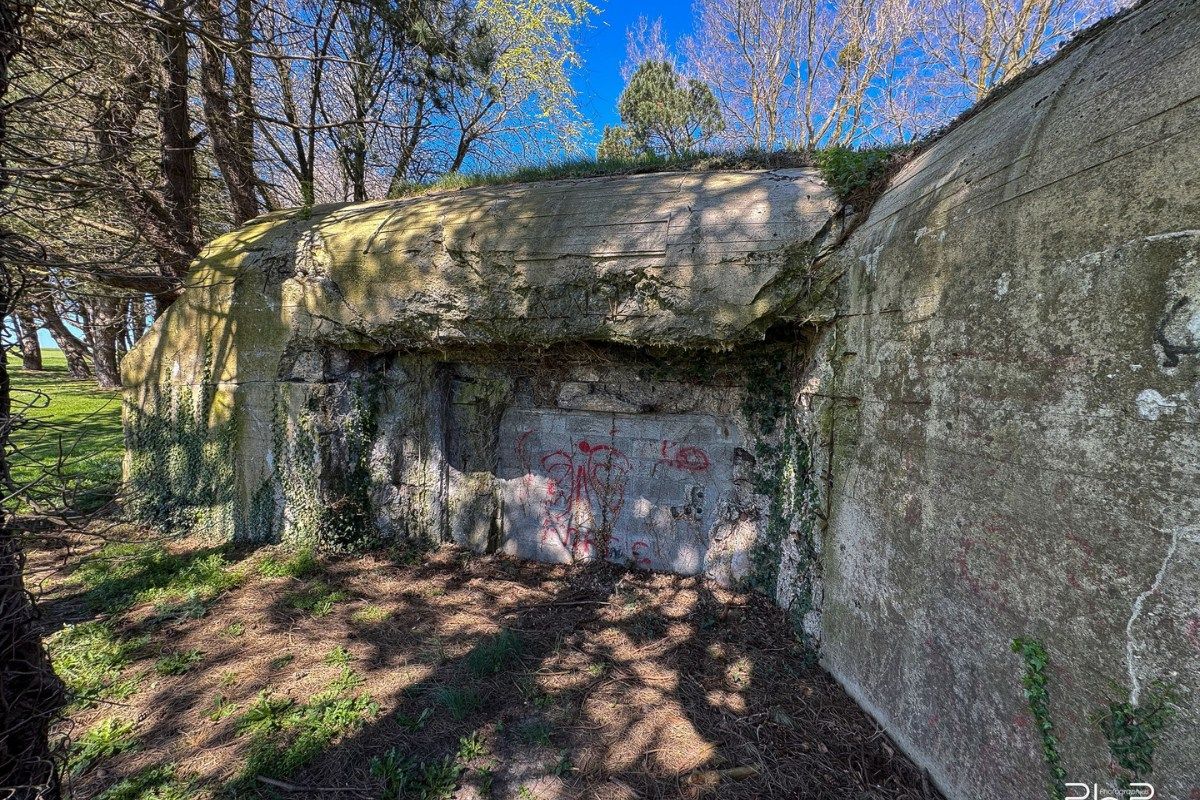
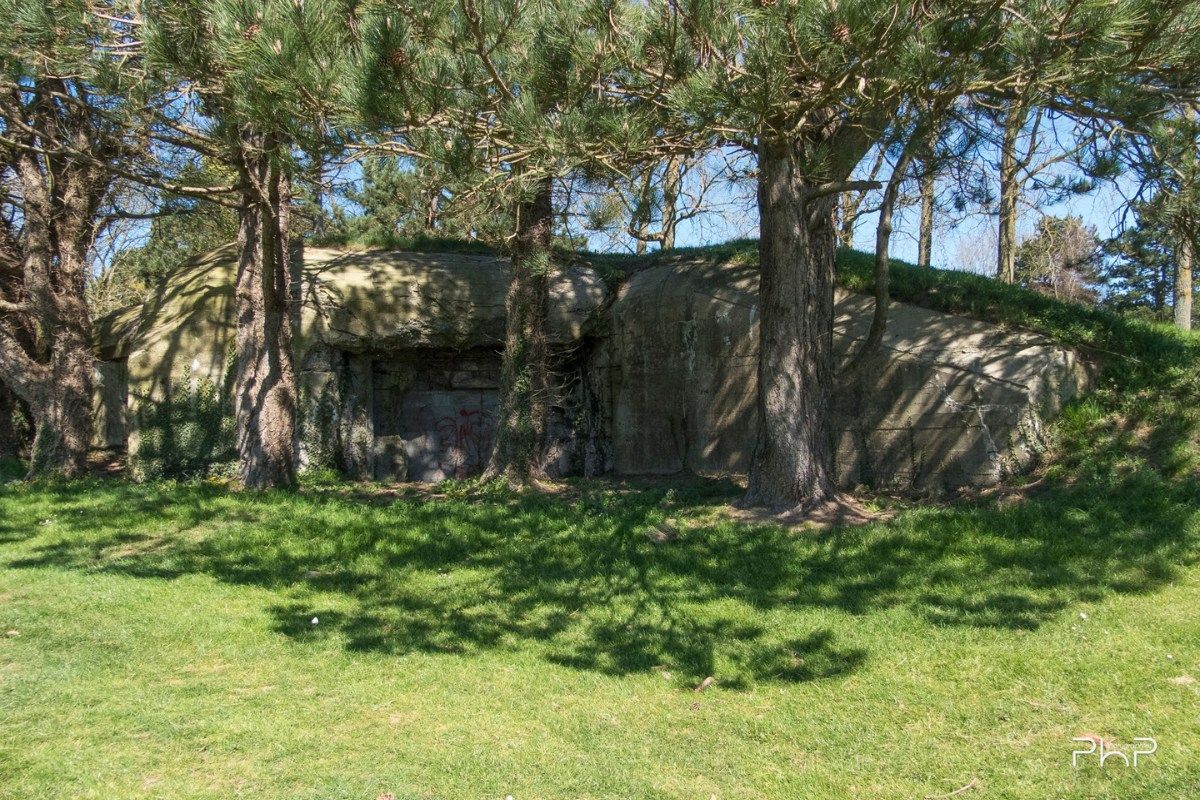
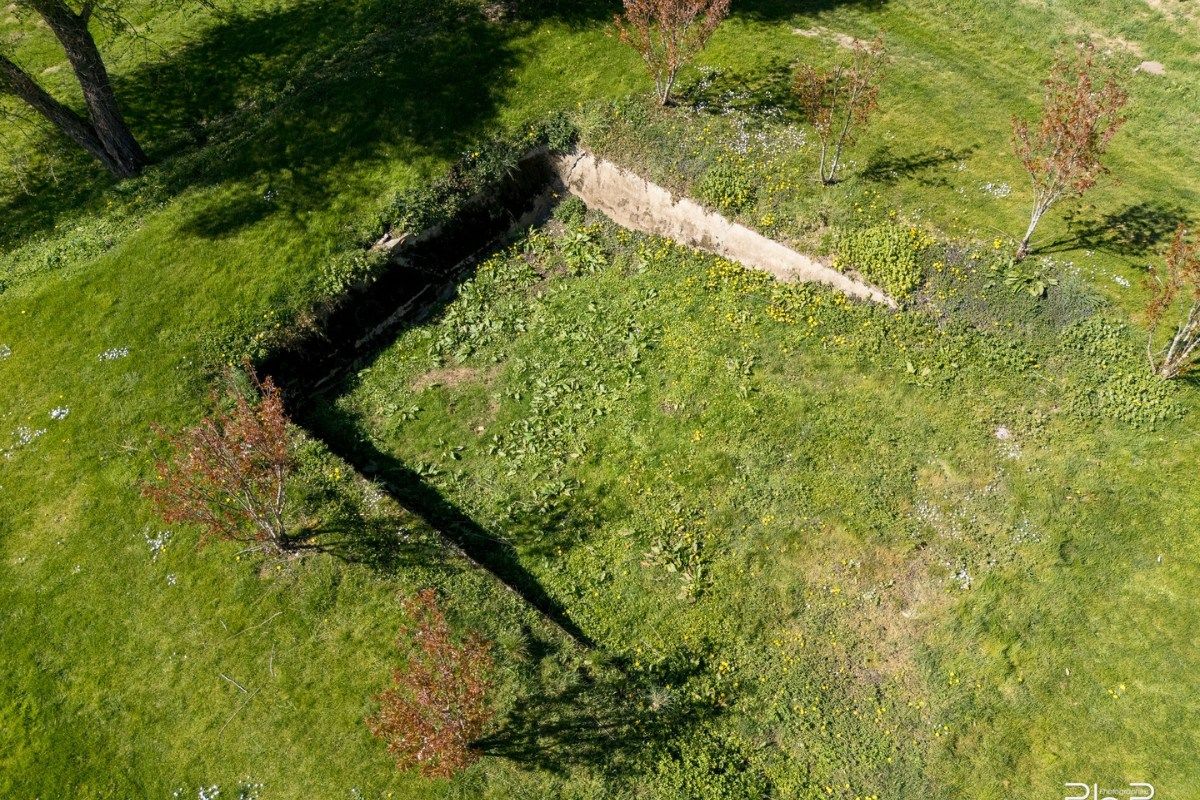
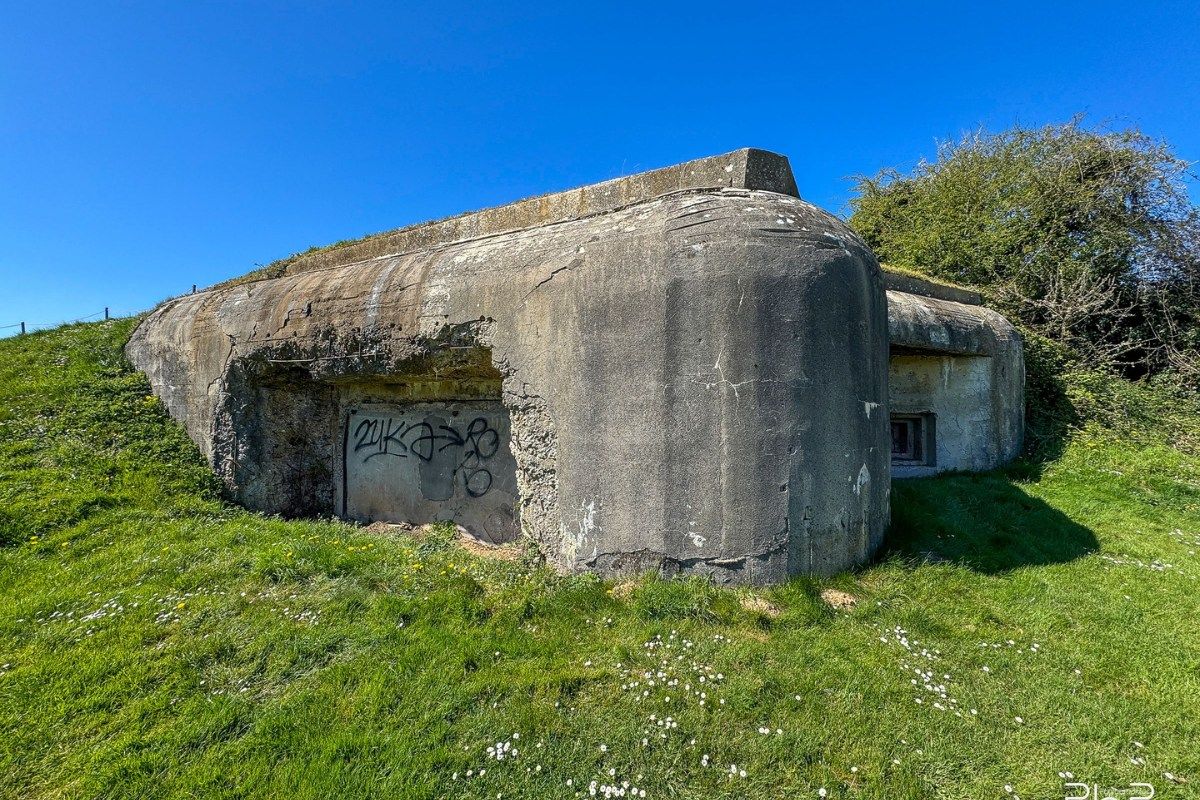
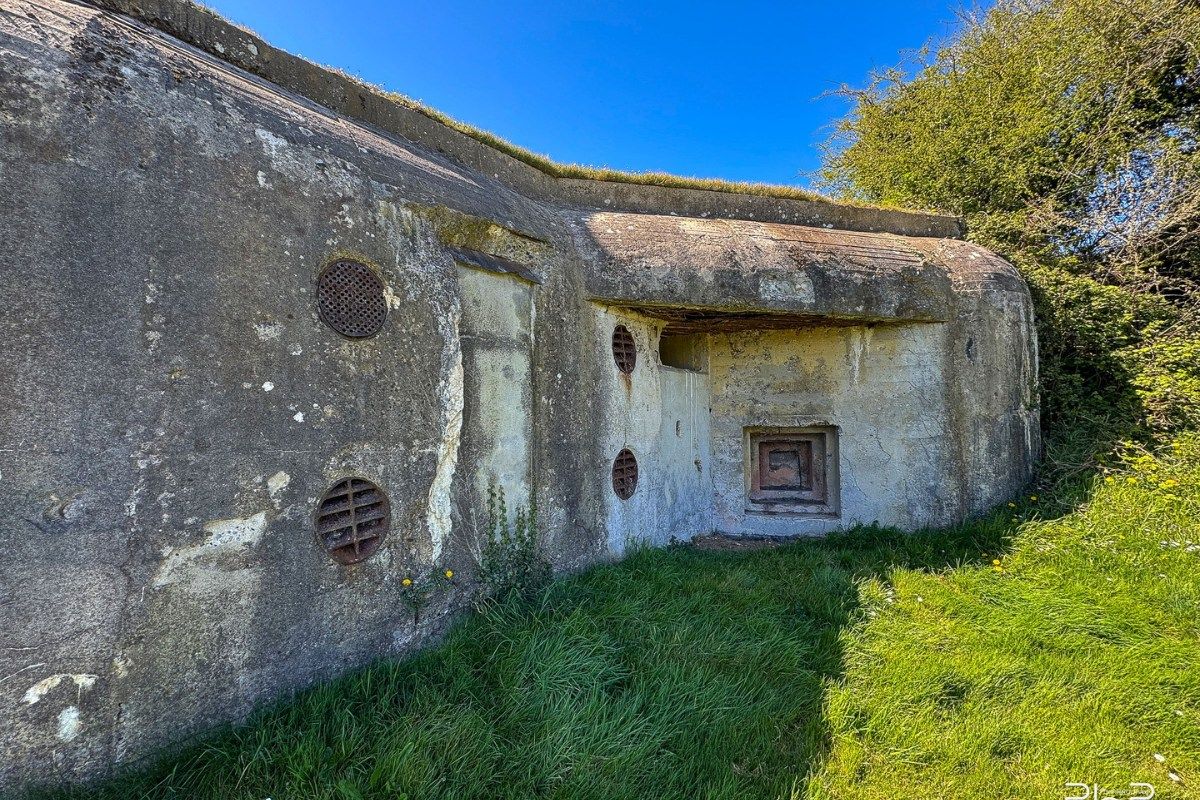
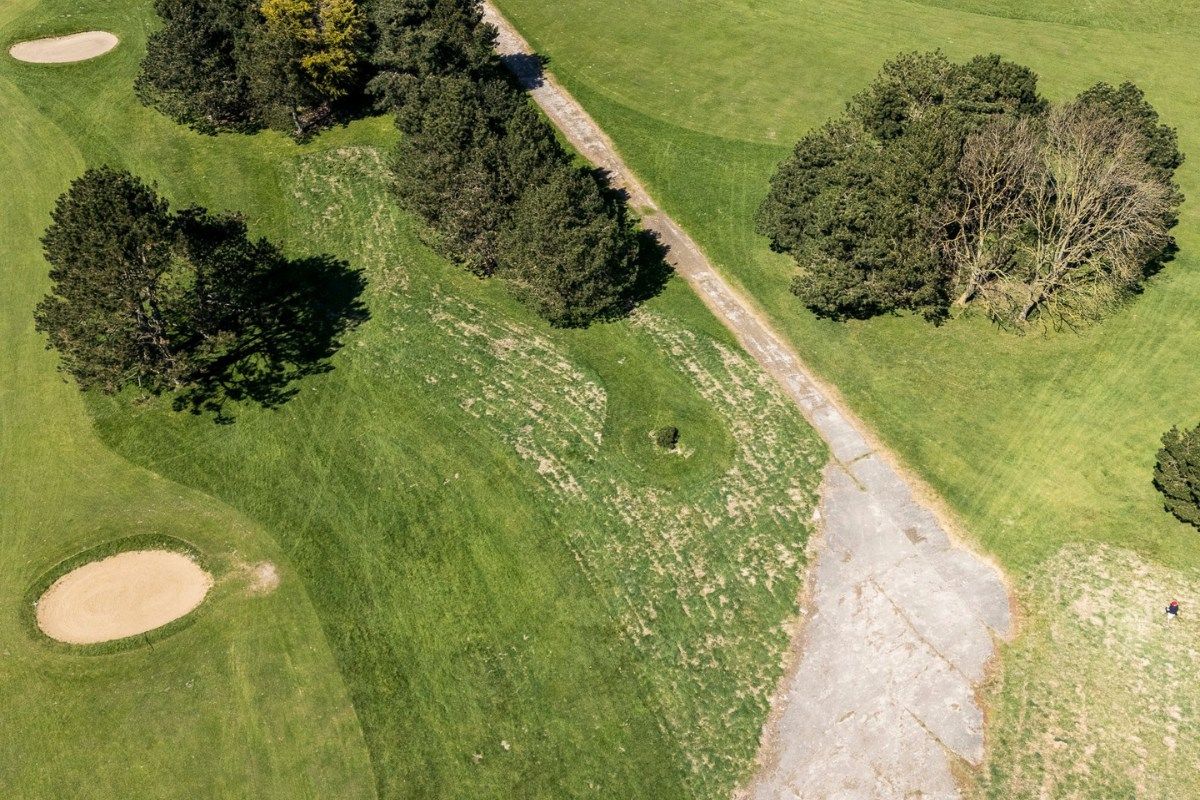
Credit : Philippe Picherit – 2025
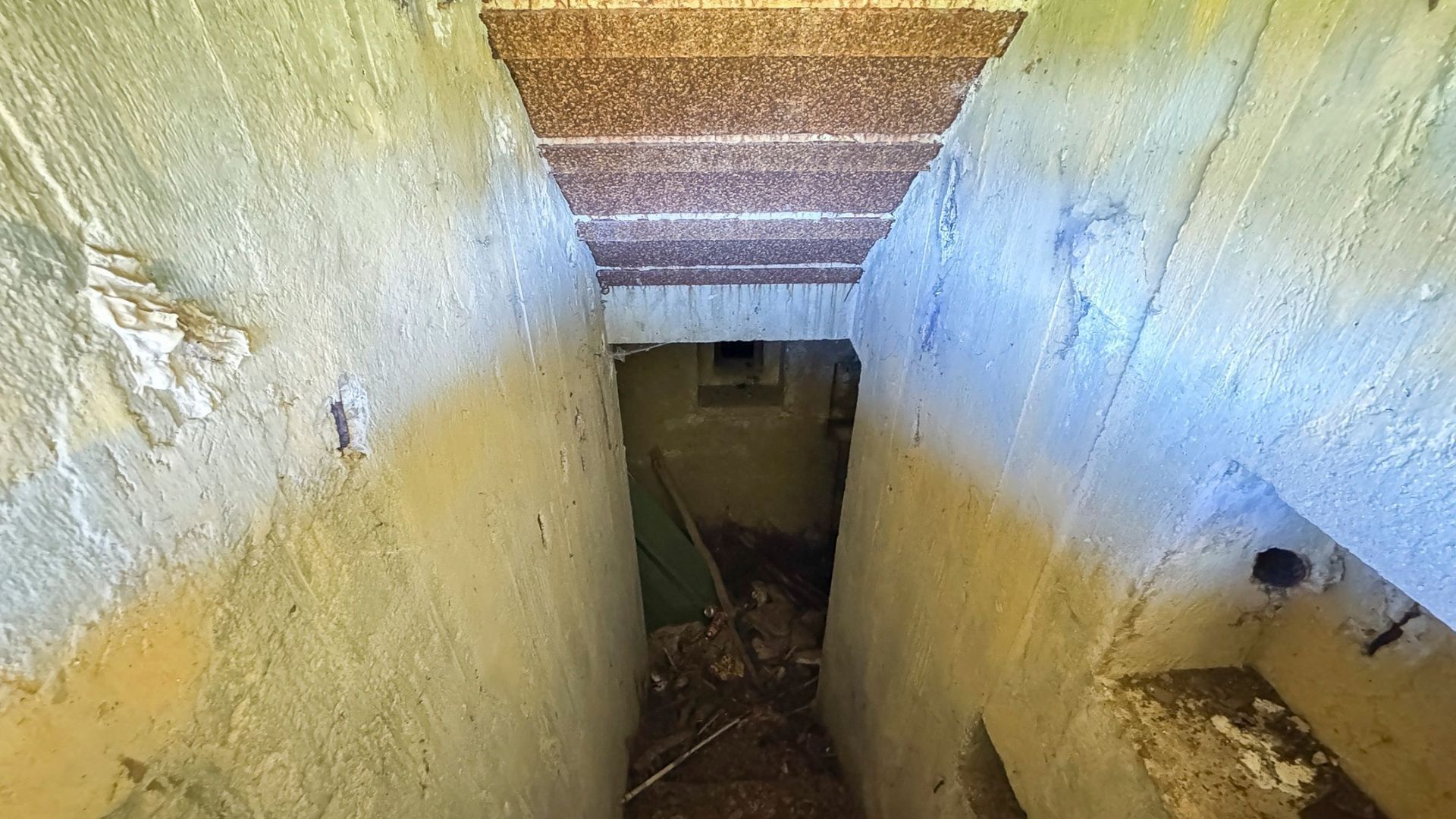
Blockhouses still visible on the course
As they play their round, golfers encounter several military structures integrated into the course layout.
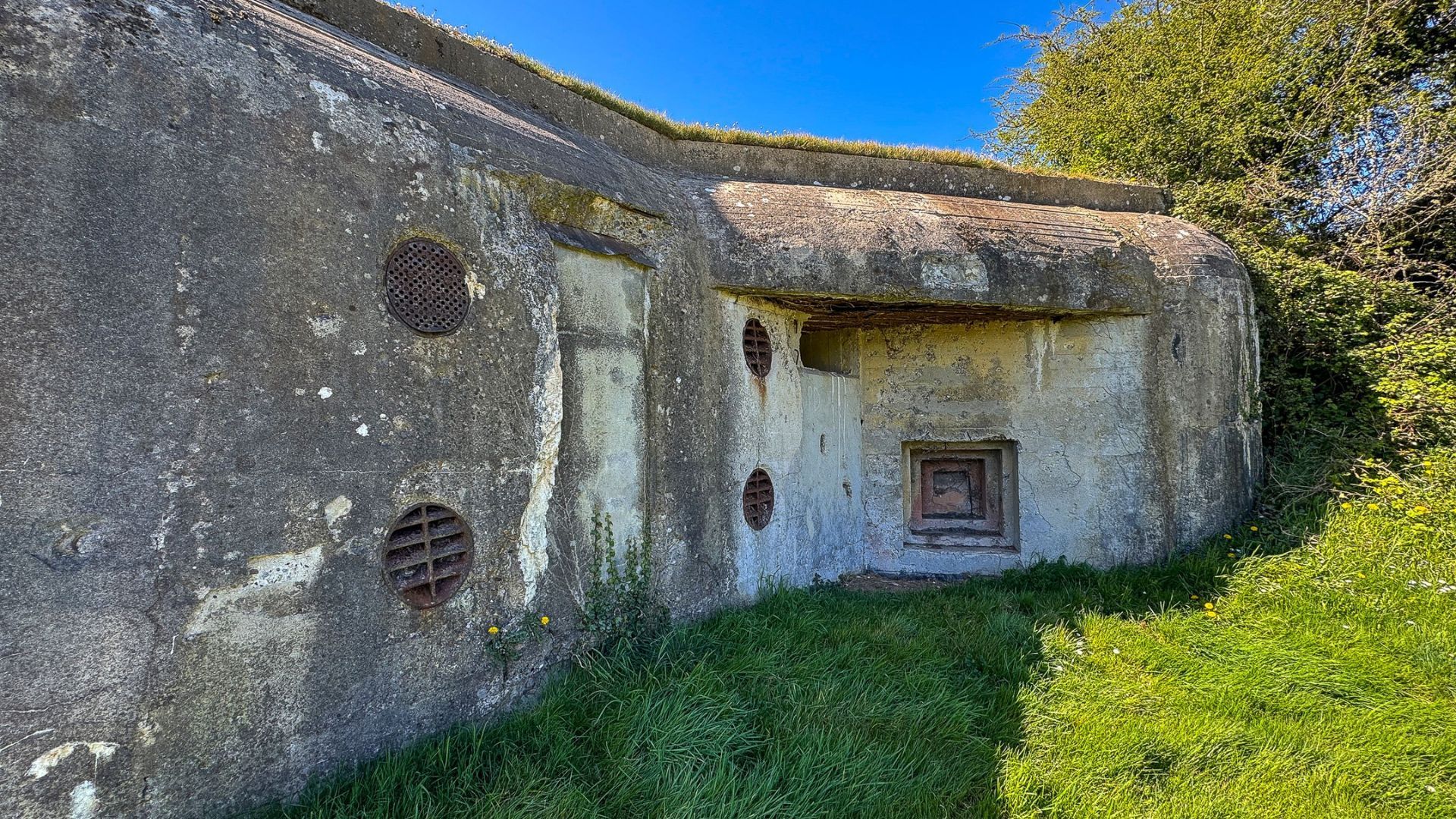
Bunkers mitrailleuse R630 (trous n°6 et n°7)
Two R630-type bunkers are still visible.
They were designed for close-range defence of the Würzburg-Riese radar.
Features :
- reinforced concrete construction,
- walls approximately 2 metres thick,
- resistance to bombing and gas attacks,
- 7.92 mm machine guns positioned to create impassable fire zones.
Often buried and camouflaged, they followed the natural contours of the terrain to reduce visibility.
They can be seen from hole 6 (above the practice range) and when moving towards hole 7
Access is now sealed.
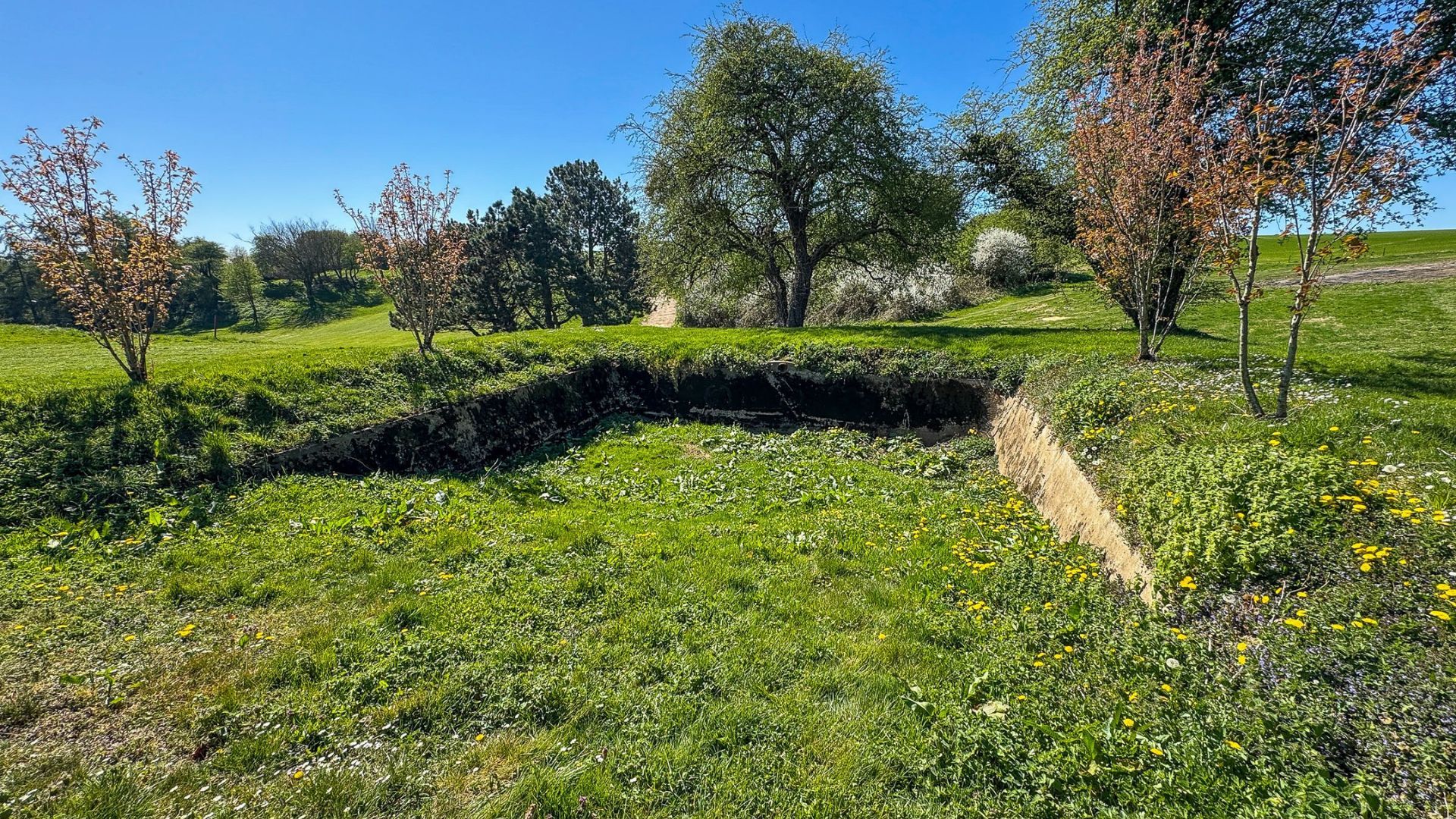
Water tank (hole 6)
This concrete tank was used to supply water to concrete mixers during the construction of the bunkers.
It can still be identified by its two terracotta drainage pipes.
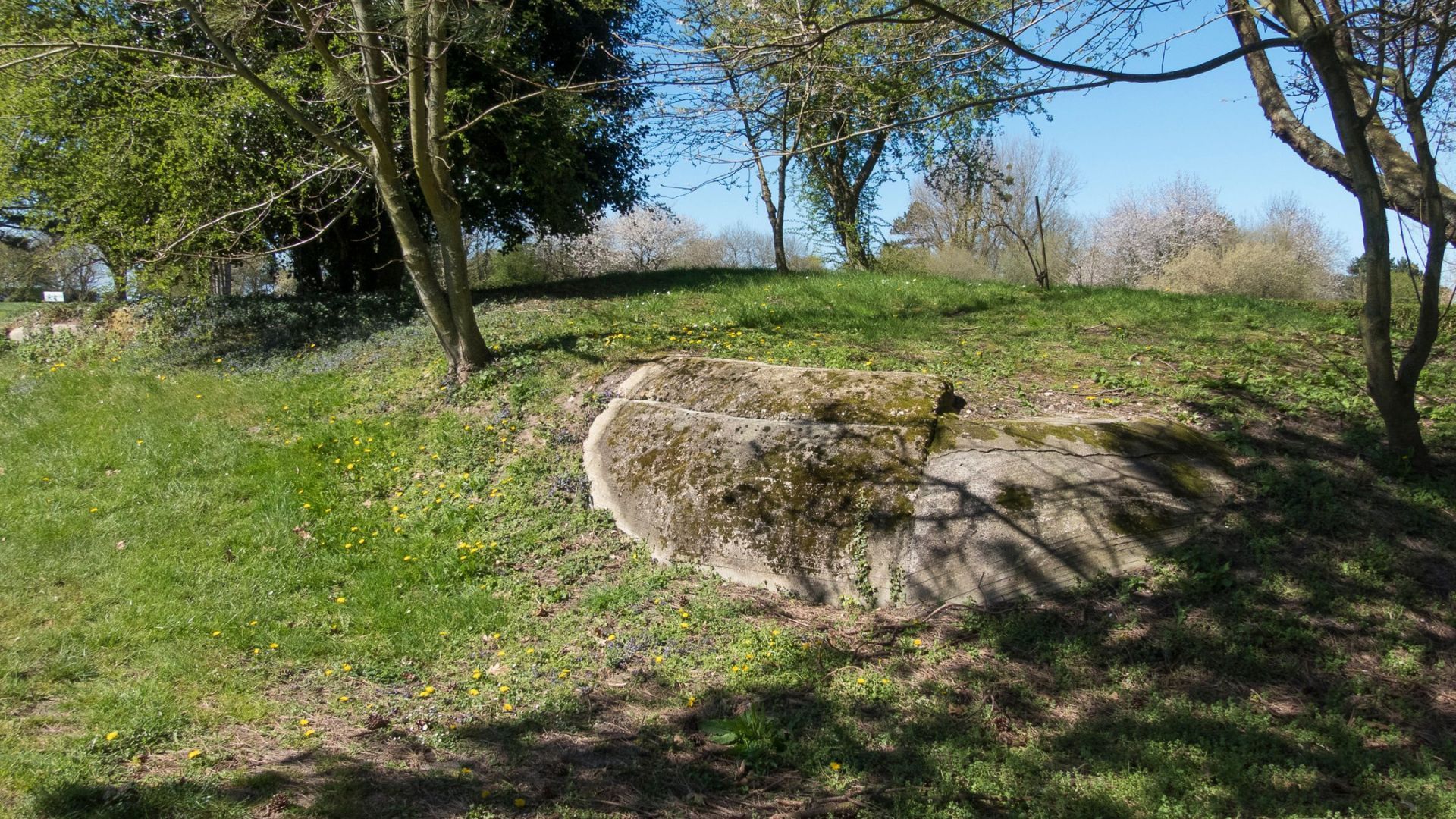
R634 observation bunker (hole 12)
Built on a high point, this bunker was used for:
- observation,
- sheltering approximately nine men.
It was equipped with a steel observation cupola featuring six firing embrasures.
R660 bunker (between holes 1, 3, 10 and 14)
This R660-type bunker likely served as a power supply unit for radar equipment.
It is now covered by an earth mound.
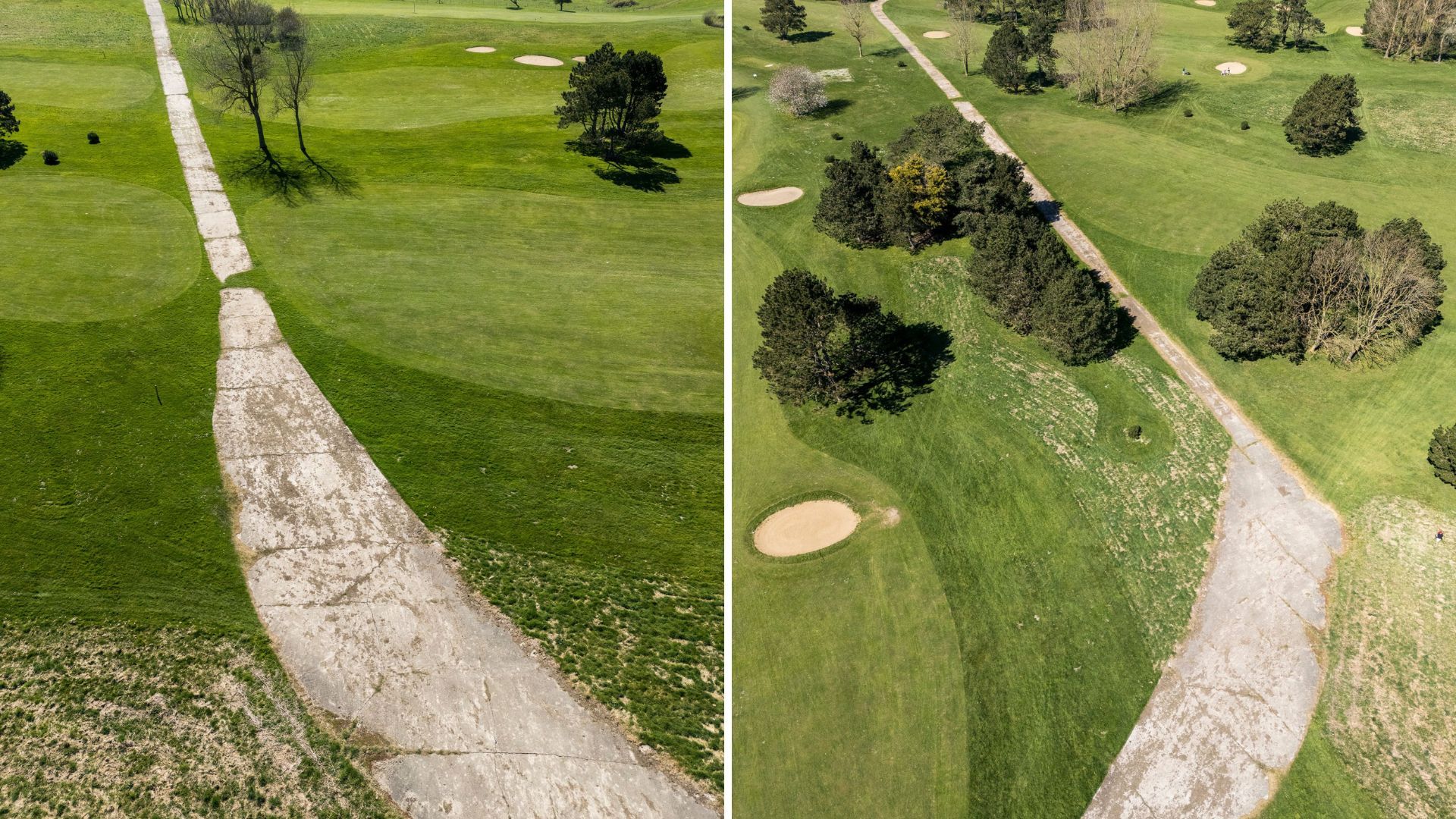
Concrete tracks
Several concrete tracks remain visible today:
- crossing holes 3, 8 and 16,
- • running alongside holes 1, 9 and 18.
They were used for logistical movement of construction and military vehicles.
Are more structures still buried beneath the course ?
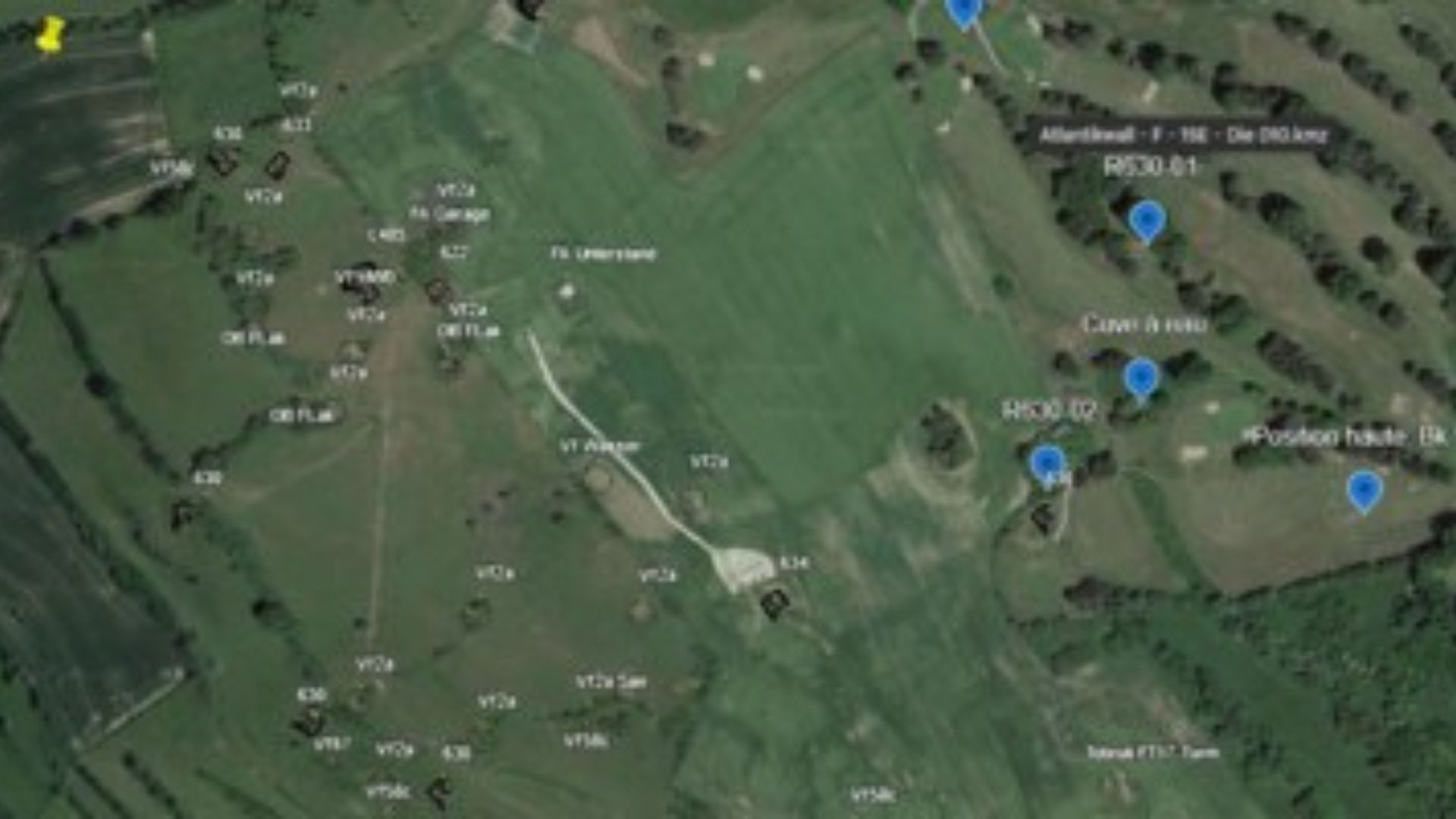
The study of historical aerial photographs reveals the presence of additional semi-buried structures, now inaccessible:
- R502 : shelter for around twenty soldiers
- R622 : an improved version of the R502, introduced later in the war
Some structures were moved, buried or destroyed during the gradual post-war urban development of the area.
Blockhouse or bunker : a question of terminology
The German term “bunker” refers to concrete military fortifications.
The word “blockhouse”, commonly used in France, dates back to World War I.
German soldiers would invite French prisoners into wooden shelters using the phrase: “Kommt Block-Haus!” (log house).
The term remained in French usage to describe these fortifications, even when built entirely in concrete.
Learn more about the history of Dieppe’s bunkers
To deepen your visit and knowledge, you may contact:
Bunker Archeo Dieppe (President : Sylvain Mathieu)
Tel : 06 73 17 91 02
contact@bunkarcheodieppe.fr -
www.bunkarcheodieppe.fr
You may also explore:
The history of Dieppe-Pourville Golf Club
D-Day and World War II in Normandy :
https://www.normandie-tourisme.fr/decouverte/d-day-et-bataille-de-normandie